MindfulFaith
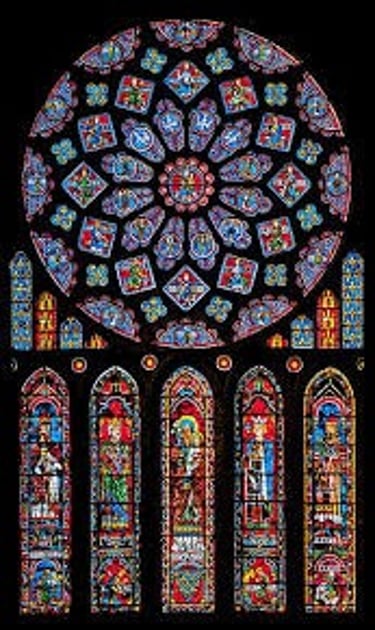
Why should the devil have all the good music?
Cultural Dysphoria and modern Fundamentalist Evangelicalism.
The Evangelical Movement and Its Struggle to Understand Modern Culture
For much of the twentieth and early twenty-first centuries, the Evangelical movement in the West, like all historically organized denominations, has found itself in a complicated relationship with modern culture. While Evangelicals have often sought to influence society through faith, morality, and public witness, they have frequently approached contemporary culture with suspicion rather than understanding. This tension has contributed to a growing disconnect, especially between Evangelical institutions and the broader societies they hope to reach.
One of the clearest illustrations of this struggle emerged in the world of music. In the late 1960s and early 1970s, many churches viewed rock music as inherently corrupt because of its associations with rebellion, sexuality, and countercultural movements. The often sited claim that it represented 'satanism' because of it's assumed 'Jungle drums' origin, bellied the Victorian White Supremist, imperialistic, (now understood as ), 'racist' view, rather than distinguishing between a musical form and the messages conveyed through it, many Evangelicals rejected the entire genre outright. Often expelling and ex-communicating persons deemed 'too worldly' to be associated with in purity and safety. Sadly this was so amongst an extensive group of professional musicians and artists. It was into this environment that Larry Norman emerged as a pioneering figure in Christian music.
His famous song, "Why Should the Devil Have All the Good Music?", became known world wide as the now ageing Sir Cliff Richards, one of modern music's greatest and long lasting stars, with 67 U.K chart hits to his credit. featured it as the opening track to his 'Small corners ' album of 1978. This was a famous challenge to the common assumption within conservative Christianity, both Evangelical and Denominational: that secular culture belonged to the forces of evil while sacred culture belonged to God. Norman argued that music itself was morally neutral. The question was not whether guitars, drums, or contemporary styles were acceptable, but what messages they carried and what purposes they served. The song's provocative title became a critique of cultural withdrawal. Norman questioned why Christians had surrendered creative and artistic spaces to others rather than engaging them thoughtfully. His argument reflected a broader theological principle: if God is the creator of all things, then no artistic medium is inherently outside God's domain. A very mindful perspective. After all the writers of 'God's culturally pure' music had used common popular tunes of their day for hymns and devotionals. Folk patters and traditional balladic, even re-written Celtic songs often feature widely. Why shouldn't young musicians, two generations ago contribute theirs?
Despite voices such as Norman's, much of the Evangelical movement continued to engage culture defensively. Popular films, television programs, fashion trends, literature, and later the internet were often approached primarily as threats rather than as cultural expressions requiring understanding and discernment. This tendency sometimes produced a simplistic worldview in which culture was divided into "Christian" and "secular" categories, leaving little room for nuance.The problem with this approach is that culture is not merely entertainment. Culture reflects the hopes, fears, values, questions, and experiences of a society. To dismiss cultural developments without understanding them is to ignore the language through which people communicate their deepest concerns. Effective engagement requires listening before criticizing and understanding before condemning. As an old musician long gone pointed out to me , ' Before pointing the finger in judgement, make sure three are not pointing back at yourself'!
Many younger generations have found this lack of cultural literacy frustrating. Millennials and Generation Z, in particular, have grown up in highly interconnected environments where music, technology, social media, film, and global perspectives shape identity. When churches respond to these realities with blanket rejection rather than thoughtful analysis, they risk appearing disconnected from the lives of the people they seek to serve.
This does not mean that all aspects of modern culture should be embraced uncritically. Every culture contains elements that deserve affirmation and elements that deserve critique. The challenge is to develop the wisdom to distinguish between the two. Historically, Christianity has often thrived not by isolating itself from culture but by engaging it creatively and thoughtfully.
The legacy of Larry Norman's question remains relevant today. "Why Should the Devil Have All the Good Music?" was never merely about music. It was about whether Christians would retreat from culture or participate in it. The song challenged believers to recognize that cultural forms can be redeemed, transformed, and used for meaningful purposes rather than abandoned out of fear.
As Western societies continue to evolve, the Denominational, Puritan. Victorian Evangelical movement faces a choice. It can continue to view modern culture primarily as an adversary, or it can seek to understand the cultural currents shaping contemporary life. Genuine understanding does not require agreement with every trend or belief. It requires the willingness to listen, learn, and engage thoughtfully.
The future relevance of Evangelicalism may depend less on its ability to oppose culture and more on its ability to understand it. In that sense, Larry Norman's challenge remains as urgent today as it was more than fifty years ago.


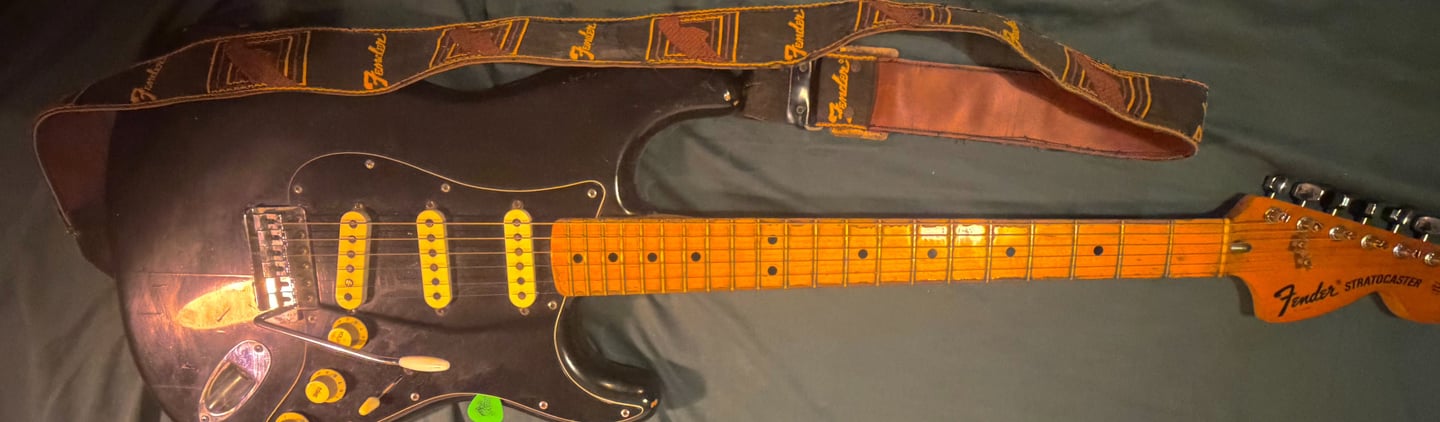
Bought new in April 1975, Fender Stratocaster
Brand
Shamelessly a de-constructional view of Faith, fit for the recovering evangelical fundamentalist and those of a non Authoritarian Victorian, Ex-Puritanical Faith.
Contact
Newsletter
info@email.com
© 2024. All rights reserved.